

Plumed Bird – Masayoshi Takanaka
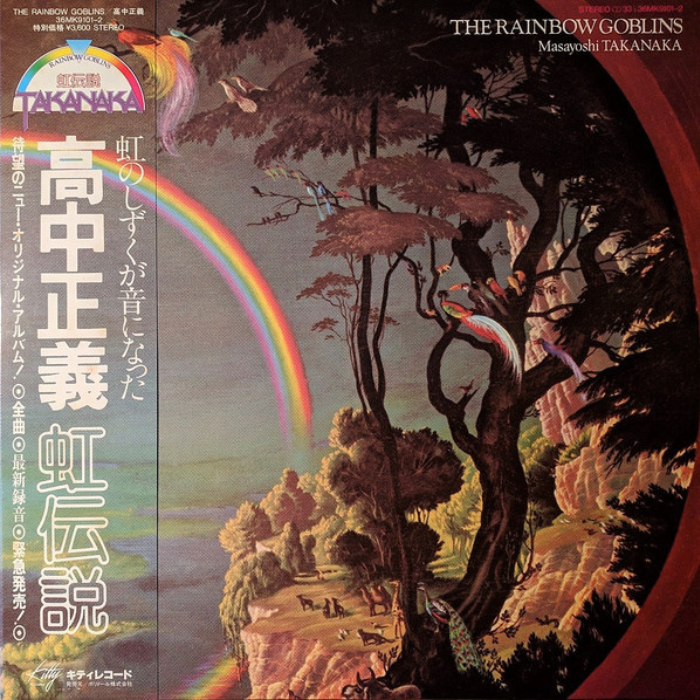
Plumed Bird by Masayoshi Takanaka is one of the grooviest songs I’ve ever heard, and I recommend it to anyone who needs a new song like that in their life. It comes from his album The Rainbow Goblins and is the second to last track – a very fitting place for it. I hope to give the album a full review soon, but for now I’d at least like to promote this song.
The beginning of the song starts with a funky guitar rift, immediately grabbing the listener’s attention. Soon after, he adds in the bass and follows it with more of his intricate guitar work. With the bass and guitar playing off each other, Takanaka creates a song where anything you listen for has a prevalent role. At the 1:40 mark, Takanaka starts a piece of musical phrasing that I consider the happiest of all time. For 35 seconds, we get a combination of keyboard, bass, guitar, drums, and a synthesizer. If I could read sheet music well, I’d break it down for you, but I unfortunately can’t. It’s the type of thing where I could make the sounds of the instruments with my voice, but not in words. Long story short, the 35 second refrain (that is played twice) may just be the happiest combination of instruments known to man.
After this, Takanaka goes into something of a breakdown period, where he isolates his guitar and makes it the focus. Sure, there are other instruments here, but from 2:55 to 4:25, he shows the world some more of what he can do on the guitar. The tone he uses is what I would just call “funky” but there’s probably more to it. By doing this, he allows the listener to get a glimpse into his own playing, especially with the section of clapping briefly introduced at 3:40. It brings an element of unity to the song, which I can’t help but think was intentional – given the story of the album at least. Until the 6:00 mark, Takanaka recalls some earlier refrains, including the blissful 40 seconds hear earlier in the song. Personally, I consider it very kind of him to let us hear it once again, so maybe I’ll thank him in person one day.
To finish, Takanaka begins doing what is called “shredding.” If you thought that he was playing well before, then I challenge you to go listen to this section in particular. The fluctuations of playing that can be heard go from high to low, low to high – all with a little bit of waaaooow if you what know I mean. To move the story into its last song, Takanaka references the intro, and plays something pretty similar to it. I don’t know if it’s exactly the same, but I would imagine he used similar ideas. To me it serves well as a “full circle” moment in music, which is something that gives me just that much more appreciation about songwriting, this song, and Takanaka (of course).
 Magical Melodies